


Shinto Wedding in Kyoto: A Cultural Guide for International Couples

Updated: 5 hours ago
For couples interested in Japanese culture, a wedding in Kyoto can offer something deeper than a beautiful setting.
A Shinto wedding ceremony, known in Japanese as shinzen-shiki (神前式), is a traditional ceremony held before the kami enshrined at a Shinto shrine. With its quiet rituals, formal wedding kimono and sacred surroundings, it offers a glimpse into a living part of Japanese wedding culture.
Kyoto, home to numerous historic shrines and centuries of cultural tradition, is a particularly meaningful place to learn about—and for some couples, participate in—this form of Japanese wedding ceremony.
For international couples considering a Shinto wedding in Kyoto, understanding the meaning behind the ceremony is just as important as choosing the location.

What Is a Shinto Wedding Ceremony?
A Shinto wedding ceremony is a marriage ceremony conducted according to Shinto traditions.
Unlike a Western-style ceremony centered on exchanging rings and spoken vows before guests, a Shinto ceremony traditionally emphasizes the couple's union, gratitude and respect before the kami.
The ceremony is usually led by Shinto priests and shrine attendants, and may include purification, prayers, the sharing of ceremonial sake and the presentation of a sacred offering.
Although the exact order and details vary between shrines, the atmosphere is generally formal, quiet and highly ceremonial.
For visitors from overseas, this can feel very different from other wedding traditions—and understanding each ritual can make the experience much more meaningful.
The History of Shinto Weddings in Japan
Shinto itself has existed in Japan for centuries, but the formal style of Shinto wedding ceremony familiar today is comparatively modern.
A particularly influential moment came in 1900, when the wedding of Crown Prince Yoshihito—later Emperor Taisho—helped inspire the development and wider adoption of shrine-style wedding ceremonies.
During the 20th century, shinzen-shiki gradually became one of Japan's recognized wedding formats.
Today, Japanese couples may choose among Shinto ceremonies, Buddhist ceremonies, Christian-style weddings, civil ceremonies and other contemporary formats.
Shinto weddings therefore represent one continuing tradition within Japan's diverse modern wedding culture.
Entering the Shrine: Sanshin

One of the most visually distinctive elements of a shrine wedding can occur before the ceremony itself begins.
Depending on the shrine, the couple and wedding party may proceed toward the ceremonial space in a formal procession often referred to as sanshin (参進).
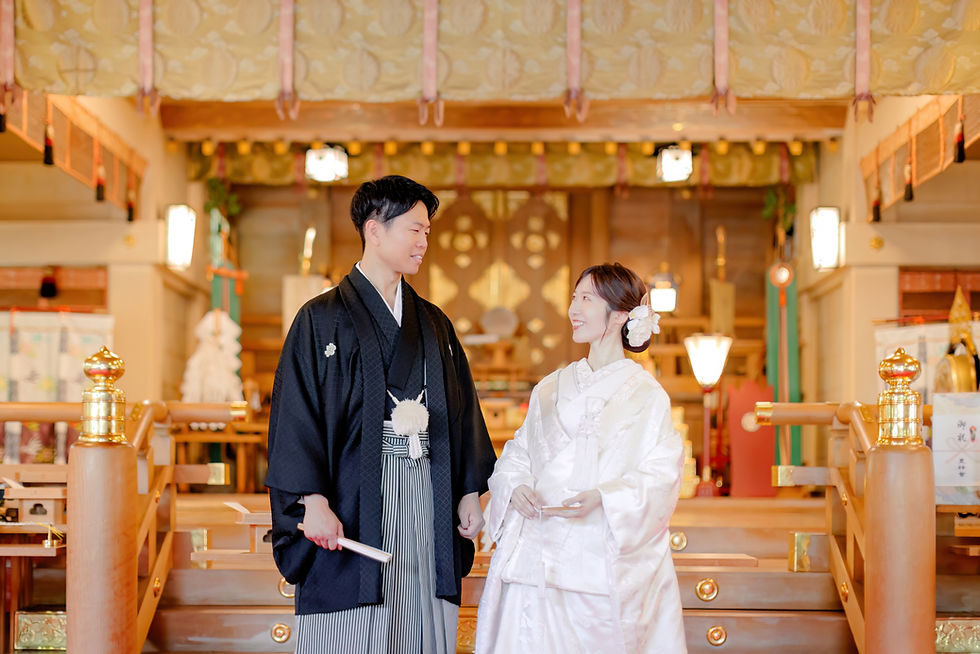
The bride in white shiromuku, the groom in formal montsuki hakama, family members and shrine attendants moving together through the shrine grounds create a solemn transition from the everyday world into the ceremony.
However, procedures vary considerably between shrines, so a formal procession should not be assumed to be part of every wedding.
Purification: Shubatsu

Purification is an important concept in Shinto ritual.
Near the beginning of many ceremonies, a priest performs shubatsu (修祓), a ritual purification of the couple and those participating in the ceremony.
Rather than being a performance for guests, this ritual prepares those present to take part respectfully in the sacred ceremony that follows.
The quiet nature of this moment reflects an important characteristic of Shinto weddings: much of their meaning is found in ritual, symbolism and atmosphere rather than spectacle.
Offering Prayers to the Kami
A Shinto priest may then recite a ritual prayer known as norito (祝詞) before the kami.
The precise wording and ceremony structure differ among shrines, but the prayer forms part of the religious dimension of the wedding.
This is one reason a shrine should never be treated merely as a picturesque wedding backdrop. It is first and foremost a place of worship.
For international couples, recognizing this distinction is an important part of participating respectfully in a Shinto wedding.
San-San-Kudo: Sharing Ceremonial Sake
Perhaps the best-known ritual associated with a Japanese Shinto wedding is san-san-kudo (三三九度).
The couple ceremonially drinks sake from cups of different sizes, traditionally taking three sips from each.
The repeated use of the number three gives the ritual its familiar name, which literally refers to “three-three-nine times.”
Rather than approaching san-san-kudo simply as an unusual Japanese wedding custom, it is better understood as a ceremonial act expressing the couple's bond within the wedding ritual.
The exact procedure may vary by shrine, and couples should follow the instructions given by the shrine attendants.
Seishi: The Couple's Vow
Some Shinto wedding ceremonies include seishi-sōjō (誓詞奏上), in which the couple presents their marriage vow before the kami.
The format varies between shrines.
For international couples who do not speak Japanese fluently, it is particularly important to confirm in advance how the shrine handles the vow and whether language support, pronunciation guidance or another arrangement is available.
Preparing for this part of the ceremony beforehand allows the couple to focus on its meaning rather than worrying about what to do next.
Tamagushi: A Sacred Offering
Another ritual that may appear during a Shinto wedding is tamagushi-hōten (玉串奉奠).
A tamagushi is a branch of the sacred sakaki tree decorated with paper streamers. During the ritual, it is respectfully presented before the kami.
The shrine will explain the appropriate movements and etiquette.
International couples do not need to arrive already knowing every detail. Listening carefully to the shrine staff and approaching the ritual respectfully is far more important than trying to perform it from memory.
What Do the Bride and Groom Wear?

Traditional wedding attire is one of the most recognizable elements of a Shinto wedding.
The bride may wear shiromuku (白無垢), an all-white formal bridal kimono associated with traditional Japanese weddings.
Depending on the wedding and styling, she may also wear an iro-uchikake (色打掛), a richly decorated outer kimono featuring colorful embroidery and auspicious motifs.
The groom commonly wears montsuki hakama (紋付袴), a formal kimono ensemble bearing family crests.
Wedding kimono is not simply costume. Its construction, motifs, accessories and dressing traditions form their own important part of Japanese culture.
For a deeper introduction to the clothing itself, see our guide: Japanese Wedding Kimono in Kyoto: A Cultural Guide to Shiromuku & Iro-Uchikake.
Why Kyoto Is a Meaningful Place for a Shinto Wedding
Kyoto's appeal goes far beyond the visual beauty of its shrines.
The city was Japan's imperial capital for more than a thousand years and remains deeply connected with traditional arts, religious practices, craftsmanship and ceremonial culture.
Many shrines are not preserved simply as historic monuments. They continue to function as active places of worship and community life.
A wedding held in this environment therefore connects the couple with a tradition that continues to be practiced today.
Season also changes the experience dramatically.
Spring may bring cherry blossoms and fresh greenery. Summer surrounds shrine grounds with deep green foliage. Autumn transforms many parts of Kyoto with red and gold leaves. Winter can offer quieter surroundings and a restrained atmosphere that complements white bridal kimono particularly beautifully.
Rather than asking only which shrine is the “most famous,” couples should consider which setting and atmosphere best reflect the experience they want.
Can International Couples Have a Shinto Wedding in Kyoto?
In some cases, yes.
A number of shrines in Kyoto accept wedding ceremonies involving international couples, but policies vary significantly.
Before making plans, couples should confirm directly with the shrine or an experienced local coordinator regarding:
Eligibility and reservation requirements
Ceremony availability
Language requirements
Required documents, if any
Number of guests permitted
Wedding attire requirements
Photography and video policies
Ceremony fees
Rules regarding external photographers or vendors
A shrine wedding should never be booked on the assumption that every shrine follows the same system. Advance confirmation is essential.
Is a Shinto Wedding Legally Binding?
This is an important distinction for international couples.
A Shinto wedding ceremony is a religious and cultural ceremony. It should not automatically be assumed to constitute legal marriage registration.
Legal marriage procedures are separate and depend on the couple's nationality, residence status and applicable Japanese and foreign laws.
Couples who need their marriage to be legally registered should check the relevant civil procedures and requirements with the appropriate government authorities.
This distinction allows couples to appreciate the cultural meaning of a shrine ceremony without confusing religious ritual with civil registration.
Photography During a Shinto Wedding

Photography rules are particularly important at shrines.
Some shrines permit professional photography during certain parts of the ceremony. Others restrict where photographers may stand, which rituals may be photographed or whether outside photographers are permitted at all.
Photography may also be allowed on some parts of the shrine grounds while being prohibited in sacred areas.
Couples and photographers should therefore confirm all rules in advance.
During the ceremony, photography should never interfere with the ritual. The priority is the ceremony itself—not creating a particular photograph.
This respectful approach is especially important in Kyoto, where many religious sites are also managing large numbers of visitors.
A Shrine Is More Than a Wedding Location
Kyoto's shrines are extraordinarily photogenic, but describing them only as “photo spots” misses their cultural significance. They are active religious spaces.
Visitors should:
Follow instructions from shrine priests and staff
Respect areas where photography is prohibited
Avoid blocking worshippers or shrine entrances
Keep voices and equipment unobtrusive
Never enter restricted spaces for a photograph
Follow rules regarding commercial or professional photography
Treat the ceremony as a religious ritual rather than a staged performance
For international visitors, learning these expectations beforehand makes the experience more comfortable for everyone involved.
Shinto Ceremony or Wedding Kimono Photoshoot?
These are related experiences, but they are not the same.
A wedding kimono photoshoot allows couples to wear traditional Japanese wedding attire and preserve the experience through professional photography.
A Shinto wedding ceremony involves participating in a religious wedding ritual conducted at a shrine.
Some international couples choose only wedding kimono photography. Others choose an actual Shinto ceremony. And some combine both—holding the ceremony first and then creating additional wedding portraits elsewhere in Kyoto.
There is no single correct choice. The important question is whether the couple is primarily seeking beautiful Japanese wedding imagery, a cultural experience, participation in a religious ceremony, or a combination of these.
Understanding that distinction helps couples choose an experience that genuinely matches their intentions.
Combining a Shrine Ceremony With Kyoto Wedding Photography
 |  |  |
Heart Art Shinto wedding photography: ritual, shrine architecture and quiet ceremonial moments.
For couples who choose an actual Shinto wedding, photography can document both the ceremony and the wider experience of being married in Kyoto.
A carefully planned day might include wedding preparation, professional hair, makeup and kimono dressing, travel to the shrine, the Shinto wedding ceremony, family and couple portraits, Kyoto location photography, and an optional change from shiromuku to iro-uchikake or Western wedding attire.
The exact schedule should always be designed around the shrine's ceremony rules rather than the photography schedule.
For couples interested in exploring different environments around the city, see Best Kyoto & Nara Pre-Wedding Photoshoot Locations.
Preparing for a Shinto Wedding as an International Couple
A little preparation can make the experience significantly more meaningful.
What the rituals mean
Knowing the basic purpose of purification, sake sharing, vows and offerings helps each moment feel less unfamiliar.
What to wear
Formal wedding kimono requires professional dressing and sufficient preparation time.
What the shrine expects
Every shrine has its own rules. Confirm them rather than relying on general information found online.
How language will be handled
If neither partner speaks Japanese, discuss communication support before booking.
How photography works
Confirm whether professional photography is allowed, where it is permitted and whether the shrine has restrictions on outside photographers.
How guests should behave
Family and friends should also understand that they are entering a place of worship.
Good preparation allows the couple to spend less time worrying about procedure and more time experiencing the ceremony itself.
Heart Art's Approach to Shinto Weddings in Kyoto
Heart Art is based in Kyoto and works with couples visiting Japan from around the world.
For couples interested in traditional Japanese weddings, our role is not simply to photograph a shrine as a beautiful background.
We help couples understand the differences between wedding kimono photography and an actual Shinto ceremony, prepare traditional bridal attire, hair and makeup, coordinate photography around shrine rules and preserve the experience respectfully.
Support is available in English, Traditional Chinese, Simplified Chinese and Japanese.
For practical information about planning a ceremony—including example shrine options and current photography packages—see our dedicated guide: Shinto Wedding Ceremony in Japan: Traditional Shrine Wedding Guide.
Frequently Asked Questions
Can foreigners have a Shinto wedding in Kyoto?
Some Kyoto shrines accept international couples, but policies vary. Couples should confirm eligibility, language requirements, ceremony rules and reservation procedures with the individual shrine.
Do we have to be Shinto?
Requirements vary by shrine. Couples interested in a ceremony should ask the shrine directly about eligibility and expectations rather than assuming that all shrines follow the same policy.
What does a bride wear for a Shinto wedding?
Shiromuku is one of the most traditional choices. Depending on the wedding, the bride may also wear iro-uchikake or change attire during the day.
What does the groom wear?
Formal montsuki hakama is traditionally associated with Japanese wedding ceremonies.
What is san-san-kudo?
San-san-kudo is a ceremonial sake-sharing ritual commonly associated with Shinto weddings. The couple drinks from ceremonial cups according to a prescribed sequence.
Can we photograph the ceremony?
Possibly, but photography rules vary significantly by shrine. Permission should always be confirmed before the wedding.
Is a shrine wedding legally recognized as marriage?
The religious ceremony and civil marriage registration are separate matters. International couples requiring legal registration should confirm the appropriate civil procedures independently.
Can we combine a Shinto ceremony with a Kyoto photoshoot?
Yes, when the shrine's schedule and photography policies allow it. Some couples combine the ceremony with portraits in wedding kimono or another outfit elsewhere in Kyoto.
Experiencing a Living Japanese Wedding Tradition
A Shinto wedding in Kyoto is visually beautiful, but its value lies in much more than photographs.
The purification rituals, ceremonial sake, wedding kimono, shrine architecture and quiet movements of the ceremony are connected to traditions that continue to be practiced in Japan today.
For international couples, approaching these traditions with understanding and respect can transform a destination wedding into a meaningful cultural experience.
Kyoto provides an extraordinary setting for that encounter—not because its traditions belong only to the past, but because many of them remain part of the living city.
 |  |
Heart Art shrine wedding portraits in quiet, respectful Japanese settings.


Comments