


Japanese Wedding Kimono in Kyoto: A Cultural Guide to Shiromuku & Iro-Uchikake

Updated: 22 hours ago
Kyoto is a city where Japanese traditions remain part of everyday life. From historic shrines and temples to traditional townhouses and seasonal landscapes, the city offers visitors countless opportunities to experience Japanese culture beyond simply seeing it.
One of the most meaningful traditions to discover in Kyoto is Japanese wedding kimono culture.
The pure white shiromuku, the richly decorated iro-uchikake, and the formal montsuki hakama worn by the groom are more than beautiful garments. Each carries centuries of history, symbolism, craftsmanship, and wishes for a couple beginning a new chapter together.
For international visitors interested in Japanese culture, understanding the meaning behind these garments can make wearing them in Kyoto a much deeper experience.

What Is a Shiromuku?
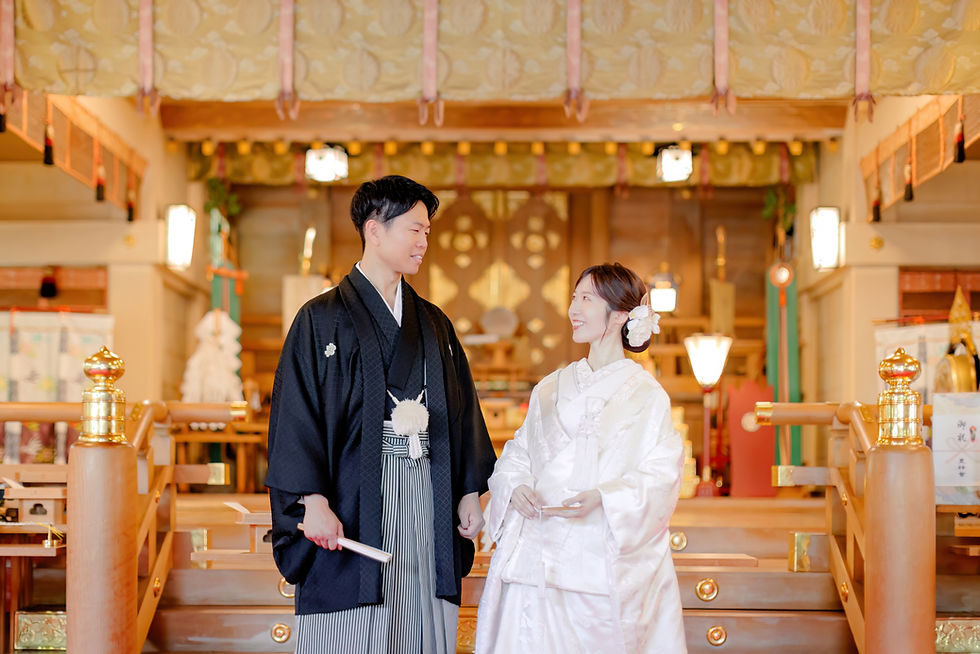
The shiromuku (白無垢) is one of the most formal bridal garments in a traditional Japanese wedding.
Almost everything the bride wears is white—from the outer kimono to the layers beneath it and many of the accompanying accessories.
The word can be understood through its characters:
Shiro (白) — white
Muku (無垢) — purity or innocence
White has long held an important place in Japanese ceremonial culture. In a wedding context, the all-white appearance represents purity and the beginning of a new stage in life.
Traditionally, shiromuku is closely associated with Shinto wedding ceremonies and is still worn today at shrines and traditional wedding venues throughout Japan.
Against Kyoto's wooden architecture, stone paths, greenery, autumn leaves or quiet shrine surroundings, the simplicity of white creates an especially timeless appearance.
What Is an Iro-Uchikake?

While shiromuku is defined by white, the iro-uchikake (色打掛) celebrates color.
It is a luxurious outer kimono traditionally worn by brides and is often decorated with elaborate embroidery, weaving, gold thread and auspicious Japanese motifs.
Common designs include:
Cranes — 鶴
Cranes have long been associated with longevity and marital harmony in Japan.
Because cranes are traditionally believed to form lasting partnerships, they frequently appear on wedding kimono as a wish for a long and harmonious marriage.
Cherry Blossoms — 桜
Cherry blossoms are one of Japan's most recognizable symbols.
Their appearance on kimono can evoke spring, beauty and the beginning of a new chapter, making them especially meaningful for weddings.
Peonies — 牡丹
The peony has historically represented beauty, prosperity and elegance.
Its large, dramatic flowers also make it a popular decorative motif on formal kimono.
Chrysanthemums — 菊
The chrysanthemum has a long history in Japanese decorative arts and is associated with longevity and nobility.
Traditional Japanese Patterns

Wedding kimono may also feature waves, clouds, fans, tortoiseshell patterns and other auspicious motifs.
These designs are not chosen only for decoration. Many express wishes for happiness, prosperity, longevity or good fortune.
Looking closely at an iro-uchikake can therefore feel almost like reading a visual story.
What Does the Groom Wear?
Traditional Japanese wedding attire is not limited to the bride.
The groom commonly wears montsuki hakama (紋付袴).
A formal ensemble generally includes a kimono bearing family crests, a haori jacket and hakama trousers.
Black montsuki with striped hakama is among the most recognizable formal styles and creates a restrained contrast beside the elaborate bridal kimono.
Together, shiromuku or iro-uchikake and montsuki hakama create the distinctive appearance associated with traditional Japanese weddings.
From Shiromuku to Iro-Uchikake: Changing Colors During a Wedding

One fascinating aspect of traditional Japanese weddings is oironaoshi (お色直し)—changing the bride's attire during the celebration.
A bride may begin in white shiromuku and later change into a colorful iro-uchikake.
Beyond creating a dramatic visual transformation, this custom reflects the importance traditionally placed on clothing, ceremony and the different stages of a wedding celebration.
Modern couples are free to interpret these traditions in their own way, but the contrast between pure white and vivid color remains one of the most beautiful elements of Japanese bridal culture.
The Art of Kitsuke: Dressing a Wedding Kimono
Putting on a formal wedding kimono is very different from putting on ordinary clothing.
Professional kitsuke (着付け)—kimono dressing—is an important part of the experience.
Several layers must be carefully arranged, adjusted and secured so that the final silhouette appears balanced and elegant.
Wedding kimono can also be considerably heavier and more structured than everyday kimono.
For this reason, professional dressing is particularly important for shiromuku and iro-uchikake.
The process itself offers an opportunity to appreciate the craftsmanship behind Japanese clothing.
Rather than seeing only the finished appearance, visitors experience how each layer, accessory and detail contributes to the complete ensemble.
Traditional Bridal Hair and Accessories

Japanese bridal styling also includes distinctive accessories.
Depending on the style chosen, a bride may wear traditional elements such as wataboshi (綿帽子) or tsunokakushi (角隠し), or combine wedding kimono with a more contemporary hairstyle.
Today, many couples choose a balance between tradition and personal expression.
A bride might wear shiromuku with a refined modern hairstyle for one part of the day and change into a more colorful style to complement an iro-uchikake later.
This flexibility is one reason Japanese wedding attire continues to evolve while maintaining a strong connection to tradition.
Shinto Wedding Ceremonies: Where Wedding Kimono Becomes Part of a Living Tradition
Traditional Japanese wedding attire is not simply ceremonial clothing. Its cultural meaning becomes especially clear when seen in the context of a Shinto wedding ceremony (神前式, shinzen-shiki).
Shinto weddings are held at shrines throughout Japan, including historic shrines in Kyoto. A ceremony may include purification rituals, prayers, the exchange of vows and san-san-kudo (三三九度), a symbolic ritual in which the couple shares sake from ceremonial cups.
The bride traditionally wears shiromuku or other formal Japanese bridal attire, while the groom may wear montsuki hakama.
Together, the clothing, shrine setting and rituals form a wedding tradition that continues to be practiced in Japan today.
Experiencing a Shinto Wedding in Kyoto
For international couples, Kyoto offers opportunities not only to wear Japanese wedding kimono for photography, but also to hold an authentic Shinto wedding ceremony at a shrine.
Several shrines in Kyoto welcome wedding ceremonies, although availability, ceremony requirements, photography policies and fees vary by shrine.
Depending on the shrine and the couple's plans, a wedding day can combine:
Traditional shiromuku and montsuki hakama
Professional kitsuke
Japanese bridal hair and makeup
A Shinto wedding ceremony
Photography at the shrine
Kyoto location photography before or after the ceremony
This creates a very different experience from simply using a shrine as a photographic background. The couple is participating in a living Japanese wedding tradition within an active religious space.
Because shrines are places of worship, couples and photographers should always respect each shrine's rules, ceremony procedures and photography restrictions.
For a more detailed explanation of the ceremony, etiquette, preparation and shrine options, read our complete guide: Shinto Wedding Ceremony in Japan: A Guide for International Couples.
Why Experience Japanese Wedding Culture in Kyoto?
Wedding kimono can be experienced in many parts of Japan, but Kyoto provides a particularly meaningful setting.
For centuries, the city has been an important center of Japanese arts, craftsmanship, religion and textile culture.
Kyoto is also closely connected with traditional kimono production, including the renowned Nishijin-ori textile tradition.
More importantly, traditional culture in Kyoto is not confined to museums.
Shrines continue to host ceremonies. Kimono can still be seen on the streets. Traditional crafts are practiced by contemporary artisans. Historic neighborhoods remain part of the living city.
Experiencing wedding kimono here therefore offers an opportunity to connect clothing with the wider cultural environment from which it developed.
Experiencing Wedding Kimono Respectfully in Kyoto
Kyoto is both a world-famous destination and a city where people live and work every day.
When enjoying traditional attire or photography in the city, respecting local communities is essential.
A few principles can make the experience better for everyone:
Follow Photography Rules
Shrines, temples, gardens and private properties have different photography policies.
Some locations require advance permission or photography fees, while others restrict professional photography entirely. Always check the rules before planning a shoot.
Respect Private Property
Many of Kyoto's most picturesque streets contain private homes and businesses. Avoid entering private property or blocking entrances for photographs.
Avoid Blocking Streets
Historic areas such as Gion can become extremely busy. Small groups, efficient photography and consideration for pedestrians help reduce disruption.
Respect Religious Spaces
Shrines and temples are not simply beautiful backgrounds. They remain active religious and cultural spaces. Follow instructions from staff, avoid restricted areas and maintain appropriate behavior.
Consider Less-Crowded Times and Places
Experiencing Kyoto early in the day or exploring locations beyond the most famous tourist spots can create a calmer experience while reducing pressure on heavily visited neighborhoods.
Responsible travel allows visitors to enjoy Kyoto while helping preserve the qualities that make the city special.
Can International Visitors Wear Japanese Wedding Kimono?
Yes.
Japanese wedding kimono experiences are increasingly available to international visitors, and wearing traditional clothing can be a meaningful way to learn about Japanese culture when approached with curiosity and respect.
You do not need to be Japanese to appreciate the history and craftsmanship of shiromuku, iro-uchikake or montsuki hakama.
What matters is understanding that these garments have cultural significance beyond their visual beauty.
Learning about the clothing, following local etiquette and working with experienced professionals can transform the experience from simply “wearing a kimono for photographs” into a genuine opportunity for cultural discovery.
Combining Cultural Experience and Photography
 |  |  |
Heart Art wedding kimono portraits: bridal styling, shrine atmosphere and seasonal Japanese scenery.
Photography has always played an important role in preserving wedding memories.
For international couples visiting Japan, professional photography can also provide a lasting record of their encounter with Japanese culture.
A thoughtful wedding kimono experience may include:
Learning about traditional Japanese wedding attire
Choosing shiromuku, iro-uchikake or montsuki hakama
Professional kitsuke
Bridal hair and makeup
Visiting an appropriate Kyoto location
Learning about local etiquette and cultural context
Professional photography documenting the experience
The photographs then become more than travel souvenirs.
They preserve the memory of participating in a tradition that has developed over generations.
Planning Wedding Kimono Photography in Kyoto
If you are considering professional wedding photography in Kyoto, location selection is also important.
Different areas offer completely different expressions of the city—from historic streets and traditional architecture to shrines, bamboo forests, gardens and seasonal landscapes.
For a detailed introduction to some of the possibilities, see our guide: Best Kyoto & Nara Pre-Wedding Photoshoot Locations.
The best location is not necessarily the most famous one. Season, time of day, photography regulations, clothing and the atmosphere you want to create should all be considered together.
Heart Art's Approach to Japanese Wedding Culture
Heart Art is based in Kyoto and welcomes couples and visitors from around the world.
Our goal is not simply to provide beautiful wedding photographs.
Through Japanese wedding attire, professional kitsuke, hair and makeup, cultural guidance and photography, we hope to create an opportunity for international visitors to experience a part of Japanese wedding culture and preserve that experience as a lifelong memory.
Experiences can be provided in English, Traditional Chinese, Simplified Chinese and Japanese.
By working respectfully with Kyoto's cultural environment and local rules, we hope to introduce the beauty and meaning of Japanese wedding traditions to more people around the world.
Frequently Asked Questions
What is the difference between shiromuku and iro-uchikake?
Shiromuku is an all-white formal bridal kimono traditionally associated with Japanese wedding ceremonies. Iro-uchikake is a colorful and often highly decorated bridal outer kimono featuring embroidery, weaving and auspicious motifs.
Can foreigners wear shiromuku in Kyoto?
Yes. International visitors can experience traditional Japanese wedding attire in Kyoto. Professional dressing and an introduction to the cultural meaning of the garments can make the experience more meaningful.
How long does wedding kimono dressing take?
Formal bridal kimono requires professional dressing and generally takes considerably longer than everyday kimono. The exact preparation time depends on the clothing, hairstyle, makeup and accessories selected.
Can we take wedding photos at Kyoto shrines and temples?
Rules vary by location. Some allow professional photography with advance permission or fees, while others restrict commercial or professional shoots. Always confirm the current rules before visiting.
What is the best season for wedding kimono photography in Kyoto?
Every season offers a different atmosphere. Spring is known for cherry blossoms, early summer for fresh greenery, autumn for colorful leaves and winter for quieter scenery and a more subdued atmosphere.
Do we need to know Japanese?
Not necessarily. International-friendly providers can assist visitors in other languages. Heart Art currently provides support in English, Chinese and Japanese.
Discovering Kyoto Through Wedding Culture
Traditional Japanese wedding attire represents much more than an aesthetic style.
From the purity of shiromuku to the auspicious patterns embroidered across iro-uchikake, every element carries stories shaped by Japanese history, craftsmanship and ceremony.
Experiencing these traditions in Kyoto offers visitors a different way to understand the city—not simply by observing its culture, but by taking the time to learn about it and participate respectfully.
And when that experience is preserved through photography, the result can become a personal connection to Kyoto that lasts long after the journey ends.
 |  |
Heart Art wedding kimono photography in traditional Japanese settings.


Comments